Guide
How to review AI-generated marketing copy
Written for beginners. This guide does not invent statistics, and it is not legal, financial or purchasing advice.
Why a last look still matters
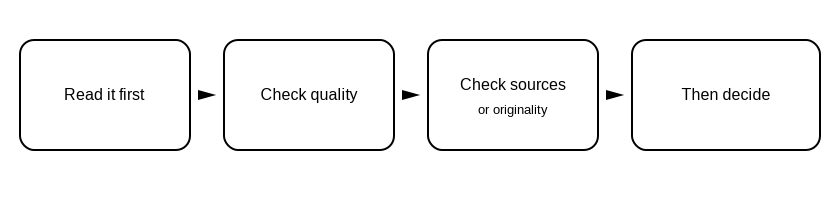
AI can draft a blog post, an ad, an email or a landing-page paragraph quickly. That does not mean the draft is ready to publish. Official pages for several tools in this directory describe the same idea in their own words: check work before it goes live. Grammarly and LanguageTool officially describe catching writing issues and keeping wording consistent. Originality.ai and Copyscape officially describe checking originality before you publish, including for AI-generated text. Markup AI officially describes reviewing drafts against brand, quality and citability standards before content goes out. Typetone officially describes checking assets against rulesets with human sign-off. This guide is a simple review order, not legal or compliance advice, and not a claim that any one tool is enough on its own.
1. Read the draft as a human first
Before you open a checker, read the draft against the brief. Is the offer right? Is the claim something your organisation is actually allowed to say? Are names, prices, dates and product details correct? A spelling checker will not catch a wrong price or an over-bold promise. Official fact-checking aids, such as the fact- and hallucination-checking feature listed on Originality.ai’s official pricing page, can be a second pass, not a substitute for someone who knows the product.
2. Check writing quality and tone
Use an official writing checker for spelling, grammar, punctuation and tone. Grammarly’s official Free plan covers spelling, grammar and seeing your writing tone; official Pro features add sentence rewrites, tone adjustment and other paid checks. LanguageTool’s official pages describe multilingual grammar, spelling and style checks, with a Premium or Teams style guide for consistent wording. If your team writes in more than one language, read LanguageTool’s official language list as well as Grammarly’s official multilingual-support wording.
3. Check brand voice and approved words
Marketing copy can be grammatically fine and still off-brand. Official brand-voice features differ by product. Grammarly officially offers a style guide and brand-tone profile on Pro and Enterprise, with tighter limits on Pro. Writer officially lists fuller departmental brand and voice profiles, brand controls and audit logs on Enterprise, not on Starter. Markup AI officially checks a draft against a Brand Profile for voice, tone, terminology, style and audience fit, including product names and words to avoid. LanguageTool officially offers personal and team style guides. Pick the official feature that matches how your team already writes, and confirm which plan includes it.
4. Check originality before you publish
If a draft might reuse existing web copy — or if an AI model may have reproduced text from the internet — run an official originality or plagiarism check. Copyscape’s official homepage is explicit about checking uniqueness before you publish, for human-written or AI-generated content. Originality.ai’s official plagiarism page is explicit that marketers can check for duplicate text to avoid SEO issues. Copyleaks officially combines plagiarism and AI-text detection in one text report, with website scans on Pro. Grammarly officially includes accidental-plagiarism and AI-text detection on paid plans. “AI detected” is not, by itself, a reason to reject a carefully reviewed draft, and this site is not an AI-detector ranking. Use these official checks to look for copied or overlapping text and to record a report if your process requires one.
5. If the page needs to rank, grade the content
For search or AI-search pages, an official SEO content audit can show whether a draft covers the topic. Clearscope officially grades a draft from A++ to F against top-ranking pages and shows what is missing before you publish. Frase’s official Site Audit crawls pages already on a site, scores technical SEO, content quality and AI-search readiness, and ranks fixes by impact — and official text says nothing changes on the site until you apply a fix. A high official grade is not a promise that a page will rank, and it is not a reason to stuff terms into a sentence that no longer reads well.
6. Check claims, channels and email separately
Ads, product pages, social posts and emails can have extra rules. Typetone officially describes checking pages, images, video and posts against rulesets, with human sign-off and an audit trail, and officially mentions rulesets such as WCAG and sustainability claims as well as brand. Markup AI officially describes quality and brand review before content goes out, and higher official plans include a batch content audit. For email, Mailgun Inspect (the official successor to Email on Acid) describes pre-send previews across 100+ clients and devices, with accessibility, link, image, HTML and spam checks on higher official plans. Official accessibility wording there refers to WCAG and the European Accessibility Act. None of these tools replaces a lawyer or your own approvals process.
7. Keep a short record, then publish
When a draft passes your checks, keep a short record: which official tools you used, the date, and any shareable report the vendor offers (for example, official shareable reports listed by Originality.ai, or official audit trails described by Typetone and Writer Enterprise). Then publish through your normal process. If a vendor later changes a feature or a price, trust the official site over this directory, and read How we review to see how listings here are written.
Do not treat an AI score as a verdict
Some official pages in this directory describe AI-text detection, plagiarism percentages or content grades. Those figures are what the vendor publishes, not a judgement from this site, and they are not a substitute for a human editor or a lawyer. A high or low official score also does not mean a draft is ready to publish. Use the official report as one input, keep a copy if your process requires it, and read the vendor’s own limits.
This directory is not a generic AI-detector ranking. Originality and plagiarism tools are listed here because official pages also describe checking marketing drafts before they go live. Brand, compliance and email QA tools are listed for the checking jobs their official sites describe.
What this guide does not do
This guide is not legal, financial, accessibility or marketing-compliance advice. It does not invent test results, customer reviews or prices. Confirm every current plan and feature on the official website. Listings have not been hands-on tested unless a page clearly says otherwise.
Related: Best AI content checker · Best AI brand voice checker · Grammarly vs Writer · Originality.ai alternatives · How we review